Showing posts with label review. Show all posts

31 May 2017

Review: Andy Brown's 'Watersong'

The title of Andy Brown’s new chapbook from Shearsman might suggest a lyric rurality, but this collection takes as its subject matter something rarely treated in either poetry or song and sets it firmly in the urban.  Brown’s topic is disease:  disease caused by water contaminated by human faeces – not quite what the reader might have expected from the title.

The collection falls into two parts.  The longer, first section, is a sequence of untitled poems grouped together as ‘Watersong’, and deals with the Exeter cholera epidemic of 1832, which killed over 400 people. This is followed by a short set of poems which address the issues of water and disease in the twenty-first century.

The ‘Watersong’ sequence is full of the grisly detail of the realities of cholera, much of it employing a lexis and register which gives an impression that some of the words might be incorporations from original texts.  We are given lists of fines for keeping insanitary conditions:

The Widow Barrier, for a nucence by keeping a mound
of filth and nastiness beneath her court, amerced 5l.8s…

lists of deaths

On July 24th, at Bury Lane –
the wife of a journeyman cordwainer.
Cholera 3 days…

and lists of symptoms

Skin cold and clammy. Cramps, emaciation.
Abnormal smell. Intelligence entire.
Vomiting and purging now profuse.
Jactition. Diarrhoea.

and we are given stories. The subject of these poems is not just cholera – it is people. So we hear of the grave digger who was attacked for carrying a coffin ‘underhand’, and the surgeon who before sewing up a dissected body ‘strokes the black heart’.

The poems in the sequence have no titles – they flow into each other in a way that creates a sense of fever and unreality in the reader –  yet even as they do this,  the poems are also formally distinct. These are poems that fall (sometimes uneasily) into the varied form of song. They use songlike features such as refrain (‘Sing: Water from the wealthy, private well…’) and chant  (‘’Plague. Plague. Plague. Plague…’).

Other poems utilise poetic forms which have their roots in song. ‘In Bury Fields’, for example,  is a rondeau  which closely follows and interacts with the form and structure of John McCrae’s ‘In Flanders Fields’. Most noticeably, six of the thirteen poems in the main sequence,  including many of the list-poems,  are fourteen-liners,  each structured in such a way as to invite the reader to see them through the lens of ‘sonnet’ (a term which, of course, has its derivation in the Italian ‘little song’). 

The subject matter of these sonnets is, however, far removed from the form’s traditional themes. This tension between form and  subject is both witty and disturbing, as is the uncertainty engendered in the reader as to whether these texts are ‘found’ or imagined.  One sonnet is a list of public orders, while several are a series of medical notes:

20th. 10. A.M. fiat pilula
quarta quaque hora sumenda:
Cupri Sulphatis, gr. ¼
Pulveris Opii, gr. ¼

The final four poems of the collection, the poems that deal with contemporary cholera deaths and the present-day attempts to address the problem of contaminated water, have titles. But they are titles which reflect the continuing problem of naming, and the way in which this results in an inability to address the central issue. In ‘The Unnameable Taxonomy’, we are given another list – this time, two pages of jauntily rhyming euphemisms:

...Room 101, or Number Two.
Auditing Assets, Doing the Do,
Taking Some Weight Off Your Troubled Mind,
Seeing How Things Turn out Behind…

In the final, unrhymed sonnet of the pamphlet, ‘The Flying Toilets of Kibera’, Brown moves the form forward into something more lyrical, and something that more closely relates to the sonnet as an image-led  structured argument:  ‘Because the politicians can’t discuss/ toilets for fear of breaking taboo…’ children such as ‘Kanja (Sanskrit, ‘water born’)’ and ‘Nafula (African, ‘born in the rain’) have to get rid of their faeces into the reservoir from which they drink. Their names are of the beauty of water, but their deaths are waiting in its contamination.

The underlying message, made explicit in these final poems of the collection, is that because society still shies away from talking about ‘answer[ing] nature’s call’, people are still, nearly two hundred years after the Exeter epidemic, dying of cholera.  Andy Brown, however,  is not shying away, he’s ‘singing’ about it. This is an intelligent and witty collection, which throws the reader into the gruesome details of an historic tragedy, while at the same time addressing an important contemporary issue. 


Watersong, Andy Brown
Shearsman, 2015
30pp

Review first published at Canto Poetry

22 April 2017

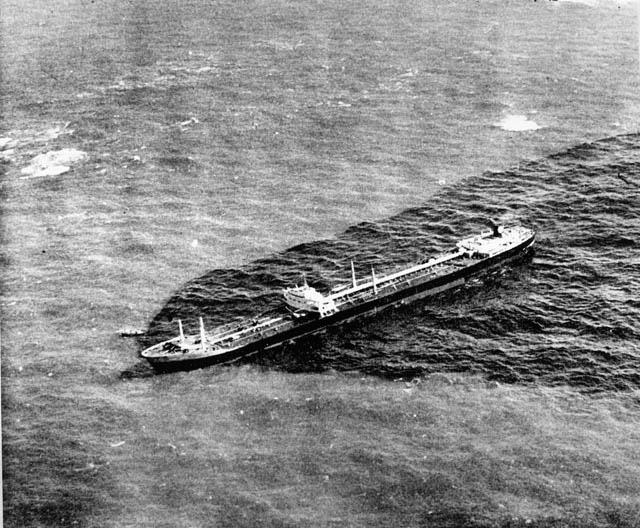
The Torrey Canyon and Jos Smith's A Plume of Smoke

Photo: www.shipwrecklog.com

Radio 4's excellent poetry programme The Echo Chamber, hosted by Paul Farley, recently examined poetry's responses to the Torrey Canyon disaster. One of the poets featured was Jos Smith. A while back, I reviewed his pamphlet A Plume a Smoke and though I'd share it again here. 


In 1967, when the Torrey Canyon ran into rocks between the Isles of Scilly and Lands End and spilled over 100,000 tonnes of oil into the sea,  I was four years old, a small child living in Cornwall. I don’t remember the disaster itself, but I do remember people talking about it. And I remember how even years later, clumps of oil, looking like black rubbery pebbles, could be found washed up on our favourite beaches. So I was very interested to read Jos Smith’s pamphlet, ‘A Plume of Smoke’, which draws on oral history accounts of the disaster.

The collection starts with poems rooted in the character of the Cornish coast and waters.  ‘Remembrance I’ uses the patterns of Biblical  language to depict the power of the sea and its relationship to the people of ‘this  place of saints and graves and mines,/ of harbour bells and broken-winged gulls’ who work on it:

The water giveth and the water taketh away.
Of the thirty-one lost out of Fowey last year,
wheeled into silence by the clock of the tides,
none survived.

Here, the people are vulnerable, and the sea is powerful. The environment Jos Smith is writing about is an entity in its own right, something huge and awesome. In ‘Trawler’, we hear that

Some nights there’s the feeling of stalking a god,
diesel rattling over the waves towards a presence…

… it hangs like a thought in the gulf stream,
blowing in and out of the dark: animal,
theological, cold.

One of the strengths of this collection is the way it realises landscape as a living thing. ‘Herbivore’, a fabulous poem, rich with sounds and images, describes Cornwall’s coast as ‘one long animal/ laid down in the slopes of cove and cliff,/ bristling with sea life like nerves in the skin…’. Everything that the coastline consists of is part of the one entity:

An animal drifting in and out of view,
breathing and sleeping, sniffing and eating,
grazing the outer edge of a volatile world.

The environment is overwhelmed by a dark, unnatural force, which is in turn, given the characteristics of a living entity. In ‘The Smell was the First Thing’,  

The weight leaned in and belittled you.
Every part of it found you out…
[…]
intimate long before
any kind of explanation

This, and many other images will stay with me a very long time: the slick as a ‘black rind on the water still as leather’; children trying to stop seabirds landing from in the oil, shouting from the beach ‘“Don’t land! Don’t land! Don’t land!”’; the flaming slick ‘Primal,/ like land forming where there was no land.’

These are poems filled, as one might expect,  with voices : the voices of sailors, of the Cornish people, of the workers brought in to try and contain the disaster. But this is a collection which also deals with memory. The 30,000 tonnes of oil that were pumped into a quarry in Guernsey in an attempt to save the coastline keeps bubbling up, despite efforts to process it, like memory itself:

A memory that we have been ill-equipped to meet
with anything but indefatigable helplessness
[…]
sleeping digester of unliftable wings,
you have been on the coastal edge of all our thoughts.

The two poems entitled ‘Remembrance’ use the language of ritual to suggest a way of dealing with these memories.  The dead are remembered and in the living, some kind of healing begins to take place. In the last poem, ‘Afterwards’, there is a quiet hope, but it acknowledges that a price will be paid:

            All that repairs, repairs quietly.
All that heals, heals in silence.

The wet head of something will rise from the pools,
dripping and lonely and not what it was.

‘A Plume of Smoke’  is itself a vehicle for remembering.


The Echo Chamber's programme about the Torrey Canyon is available to listen online until 14 May 2017.

A Plume of Smoke is available to purchase from Maquette Press. 

25 November 2015

Art from poetry/poetry from art: blueshift

I've just had the pleasure of reviewing this lovely pamphlet, a linked sequence of original art and poetry responses, at Abegail Morley's Poetry Shed. You can read the review here, and purchase the book here. It's beautiful, and would make a lovely Christmas present for anyone who likes art or poetry! 

The poets and artists featured in the pamphlet are:

Stephanie Arsoska
Becky Cherriman
Claire Collison
Karen Dennison
Sheena Drayton
Lizanne van Essen
Saras Feijoo
Tessa Frampton
Rebecca Gethin
Pam Job
Pete Kennedy
Agnes Marton
Sam Smith
Emmy Verschoor

6 November 2015

Hundred Word Review: Smith


I love the poetry of Michael Donaghy. If I were on a desert island and only allowed a single author's collected poems, his would certainly be on my shortlist. But Donaghy, who died of a brain haemorrhage in 2004, can be difficult sometimes - his work is metaphysical and allusive, plays tricks with the reader. In this book, Don Paterson, Donaghy's friend and editor, gives us his reading of a selection of poems. His commentaries are witty, knowledgeable and unpretentious: you feel like you're sitting in the pub, chatting about an old friend. This is a brilliant book for anyone who wants to get to know Donaghy's poems, or to know them better. 


Smith: A Reader's Guide to the Poetry of Michael Donaghy, Don Paterson
Picador, 2014


26 September 2015

Chapbooks and Marc Woodward's 'A Fright of Jays'

I've just come across Maquette, a Devon-based publisher of chapbooks. Their list is small but, judging by the two pamphlets I've read so far, excellent. They have published four:  Kelvin Corcoran's Radio Archilochus, Jos Smith's A Plume of Smoke, Sally Flint's The Hospital Punch and Marc Woodward's A Fright of Jays.


I like chapbooks and pamphlets. They create a different reading experience from that of a full collection: tighter and more focussed. The poet has the opportunity to explore a theme or subject in depth without it becoming overwhelming. Poems are able to 'talk' to each other more intimately. And they're not so heavy to carry around!

You can find my review of Marc Woodward's A Fright of Jays, here at Canto Poetry.

10 August 2015

The Invisible Girl by EE Nobbs


First of all, I have to come clean - I know the poet whose book I'm recommending here. But that's not why I'm writing about it - I'm writing about it because it's great!

Elly Nobbs' The Invisible Girl won the 2013 Doire Press Competition, and reading it, one can see why. Her poetry is rooted in rural Canada, with poems about family, and cattle, and collecting firewood; but it zooms its way through science and science fiction as well, in poems ranging from the microscopic (amoebae) and the infinite (space).

In Re-Write, she raises questions about reality and truth; and what a poem is, and what it's for. The poem recounts a family disaster when the cows died, but starts

We're supposed to lie in poems:
so here's one 

Threading the poem through with repetitions of 'I suppose', and the dreadful concrete details of the cows' suffering -
...their stomachs
blew up like olive green balloons
and her father
stuck their bellies with Mom's carving knife,
let out the fermented gas, called the vet -
who couldn't help. Kaput. Like that.
- the speaker holds off till the very end to reveal which part of her story was the lie.

In The Cure, the small world of the speaker echoes the smallness of our everyday experience:
Days are like zoos. It's unnatural
and tiresome under the grey microscope
in this tiny room where I get paid 
to tally invisible dead
insects in brine...
but in Space Ship Captain, the poem from which the collection's title is taken, when a girl is assigned the task to
                    ...sort
invisible bits of
things into piles -
one room's for wings
with black holes; 
nonsclerotized bits with no pronotums
must go some-
where else
she decides to do something else with the bits, and makes herself an 'Apollo Saturn V rocket'. By Act II the 'Invisible Girl' is breaking into NASA, and by the end, she's off on her travels, and, at least to herself, invisible no more.

This collection is sparkling with wit and weirdness, and at times as playful as a puppy, but its concerns are deep and universal. It's a magical collection, and well worth ordering all the way from Canada. As Bill Greenwell says, 'Elly Nobbs writes like Emily Dickinson on Mescalin'. Who could ask for more?

The Invisible Girl is available here.


25 April 2015

Nell Farrell's Mermaids


Oh, I loved this slim pamphlet. Loved the cover design which seems to hold both the stillness of amber and the movement of water, and loved the typeface which seemed quite ordinary until it went into curly, almost mythological, italics. In fact, these physical characteristics of the book might be seen to symbolise the world Nell Farrell depicts within these pages. 

Nell Farrell's Mermaids come to stay like a gaggle of teenage foster-daughters from somewhere very other. They try out human life with a zest that has them talking like buses and emptying the contents of the freezer, visiting Cornwall, going for speech therapy; and experiencing Christmas, when films featuring pirates
                        ...lure them
to sit enraptured in the greenish light,
arms around each others' waists,
soothed to a slightly puzzled bliss
Ordinary things are transformed through the mermaids' gaze, while the speaker's ordinary life is transformed by their presence. These poems are funny and poignant and sparkling with language. I loved them.

The second part of the pamphlet widens its scope to other characters: nuns and goblins, circus acts. I particularly liked the two short sequences. In 'Ascension' an artist's model finds that his experience leaves him strangely changed, and in 'Assessing the Librarian', real facts become surreal facts, and artefacts become talismans:
That's an angels' vertebra. I found it on a beach in Greece.
I've always loved it there; they gave so many words
to my profession: heuristic, hermeneutics.
This is a fabulous collection, in every sense of the word: an exuberant place where there is no distinction between story and everyday life.

Mermaids and Other Devices is published by Moormaid Press, and can be ordered very easily from the publisher here.