 |
| Photo: www.shipwrecklog.com |
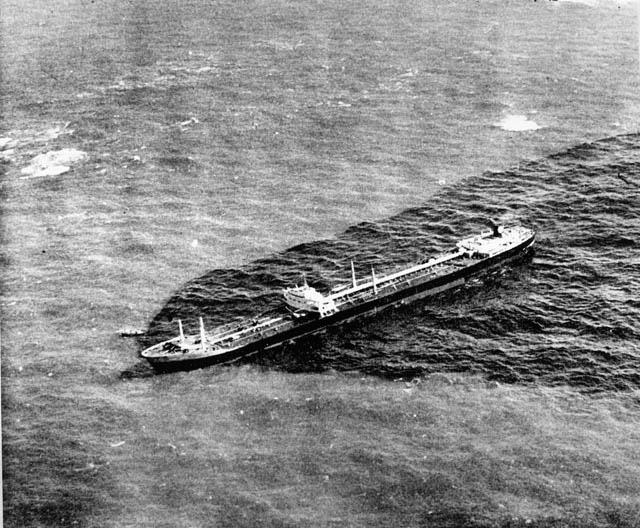
Radio 4's excellent poetry programme The Echo Chamber, hosted by Paul Farley, recently examined poetry's responses to the Torrey Canyon disaster. One of the poets featured was Jos Smith. A while back, I reviewed his pamphlet A Plume a Smoke and though I'd share it again here.
In 1967, when the Torrey Canyon ran into rocks between the
Isles of Scilly and Lands End and spilled over 100,000 tonnes of oil into the
sea, I was four years old, a small child
living in Cornwall. I don’t remember the disaster itself, but I do remember
people talking about it. And I remember how even years later, clumps of oil,
looking like black rubbery pebbles, could be found washed up on our favourite
beaches. So I was very interested to read Jos Smith’s pamphlet, ‘A Plume of
Smoke’, which draws on oral history accounts of the disaster.
The collection starts with poems rooted in the character of
the Cornish coast and waters. ‘Remembrance
I’ uses the patterns of Biblical
language to depict the power of the sea and its relationship to the
people of ‘this place of saints and
graves and mines,/ of harbour bells and broken-winged gulls’ who work on it:
The water giveth and the water
taketh away.
Of the thirty-one lost out of
Fowey last year,
wheeled into silence by the clock
of the tides,
none survived.
Here, the people are vulnerable, and the sea is powerful. The
environment Jos Smith is writing about is an entity in its own right, something
huge and awesome. In ‘Trawler’, we hear that
Some nights there’s the feeling
of stalking a god,
diesel rattling over the waves
towards a presence…
… it hangs like a thought in the
gulf stream,
blowing in and out of the dark:
animal,
theological, cold.
One of the strengths of this collection is the way it
realises landscape as a living thing. ‘Herbivore’, a fabulous poem, rich with
sounds and images, describes Cornwall’s coast as ‘one long animal/ laid down in
the slopes of cove and cliff,/ bristling with sea life like nerves in the
skin…’. Everything that the coastline consists of is part of the one entity:
An animal drifting in and out of
view,
breathing and sleeping, sniffing
and eating,
grazing the outer edge of a
volatile world.
The environment is overwhelmed by a dark, unnatural force,
which is in turn, given the characteristics of a living entity. In ‘The Smell
was the First Thing’,
The weight leaned in and
belittled you.
Every part of it found you out…
[…]
intimate long before
any kind of explanation
This, and many other images will stay with me a very long
time: the slick as a ‘black rind on the water still as leather’; children
trying to stop seabirds landing from in the oil, shouting from the beach
‘“Don’t land! Don’t land! Don’t land!”’; the flaming slick ‘Primal,/ like land
forming where there was no land.’
These are poems filled, as one might expect, with voices : the voices of sailors, of the
Cornish people, of the workers brought in to try and contain the disaster. But
this is a collection which also deals with memory. The 30,000 tonnes of oil
that were pumped into a quarry in Guernsey in an attempt to save the coastline keeps
bubbling up, despite efforts to process it, like memory itself:
A memory that we have been
ill-equipped to meet
with anything but indefatigable
helplessness
[…]
sleeping digester of unliftable
wings,
you have been on the coastal edge
of all our thoughts.
The two poems entitled ‘Remembrance’ use the language of
ritual to suggest a way of dealing with these memories. The dead are remembered and in the living,
some kind of healing begins to take place. In the last poem, ‘Afterwards’, there
is a quiet hope, but it acknowledges that a price will be paid:
All
that repairs, repairs quietly.
All that heals, heals in silence.
The wet head of something will
rise from the pools,
dripping and lonely and not what
it was.
‘A Plume of Smoke’ is
itself a vehicle for remembering.
The Echo Chamber's programme about the Torrey Canyon is available to listen online until 14 May 2017.
A Plume of Smoke is available to purchase from Maquette Press.


