
17 January 2018

31 May 2017
Review: Andy Brown's 'Watersong'
The title of Andy Brown’s new
chapbook from Shearsman might suggest a lyric rurality, but this collection
takes as its subject matter something rarely treated in either poetry or song and
sets it firmly in the urban. Brown’s
topic is disease: disease caused by
water contaminated by human faeces – not quite what the reader might have
expected from the title.
The collection falls into two parts. The longer, first section, is a sequence of
untitled poems grouped together as ‘Watersong’, and deals with the Exeter cholera epidemic of 1832, which killed over 400 people.
This is followed by a short set of poems which address the issues of water and
disease in the twenty-first century.
The ‘Watersong’ sequence is full of
the grisly detail of the realities of cholera, much of it employing a lexis and
register which gives an impression that some of the words might be
incorporations from original texts. We
are given lists of fines for keeping insanitary conditions:
The Widow
Barrier, for a nucence by keeping a mound
of filth and
nastiness beneath her court, amerced 5l.8s…
lists of deaths
On July 24th,
at Bury Lane –
the wife of a journeyman
cordwainer.
Cholera 3 days…
and lists of symptoms
Skin cold and
clammy. Cramps, emaciation.
Abnormal smell.
Intelligence entire.
Vomiting and
purging now profuse.
Jactition.
Diarrhoea.
and we are given stories. The
subject of these poems is not just cholera – it is people. So we hear of the
grave digger who was attacked for carrying a coffin ‘underhand’, and the
surgeon who before sewing up a dissected body ‘strokes the black heart’.
The poems in the sequence have no
titles – they flow into each other in a way that creates a sense of fever and
unreality in the reader – yet even as
they do this, the poems are also
formally distinct. These are poems that fall (sometimes uneasily) into the varied
form of song. They use songlike features such as refrain (‘Sing: Water from the wealthy, private well…’) and chant (‘’Plague. Plague. Plague. Plague…’).
Other poems utilise poetic forms
which have their roots in song. ‘In Bury Fields’, for example, is a rondeau which closely follows and interacts with the
form and structure of John McCrae’s ‘In Flanders Fields’. Most noticeably, six of
the thirteen poems in the main sequence,
including many of the list-poems, are fourteen-liners, each structured in such a way as to invite the
reader to see them through the lens of ‘sonnet’ (a term which, of course, has
its derivation in the Italian ‘little song’).
The subject matter of these sonnets
is, however, far removed from the form’s traditional themes. This tension
between form and subject is both witty
and disturbing, as is the uncertainty engendered in the reader as to whether
these texts are ‘found’ or imagined. One
sonnet is a list of public orders, while several are a series of medical notes:
20th.
10. A.M. fiat pilula
quarta quaque hora sumenda:
Cupri Sulphatis,
gr. ¼
Pulveris Opii, gr. ¼
The final four poems of the
collection, the poems that deal with contemporary cholera deaths and the
present-day attempts to address the problem of contaminated water, have titles.
But they are titles which reflect the continuing problem of naming, and the way
in which this results in an inability to address the central issue. In ‘The
Unnameable Taxonomy’, we are given another list – this time, two pages of jauntily
rhyming euphemisms:
...Room 101, or
Number Two.
Auditing Assets,
Doing the Do,
Taking Some
Weight Off Your Troubled Mind,
Seeing How
Things Turn out Behind…
In the final, unrhymed sonnet of
the pamphlet, ‘The Flying Toilets of Kibera’, Brown moves the form forward into
something more lyrical, and something that more closely relates to the sonnet
as an image-led structured argument: ‘Because the politicians can’t discuss/ toilets
for fear of breaking taboo…’ children such as ‘Kanja (Sanskrit, ‘water born’)’
and ‘Nafula (African, ‘born in the rain’) have to get rid of their faeces into
the reservoir from which they drink. Their names are of the beauty of water,
but their deaths are waiting in its contamination.
The underlying message, made
explicit in these final poems of the collection, is that because society still
shies away from talking about ‘answer[ing] nature’s call’, people are still, nearly
two hundred years after the Exeter epidemic, dying of cholera. Andy Brown, however, is not shying away, he’s ‘singing’ about it. This
is an intelligent and witty collection, which throws the reader into the
gruesome details of an historic tragedy, while at the same time addressing an
important contemporary issue.
Watersong, Andy Brown
Shearsman, 2015
30pp
Review first published at Canto Poetry
22 April 2017
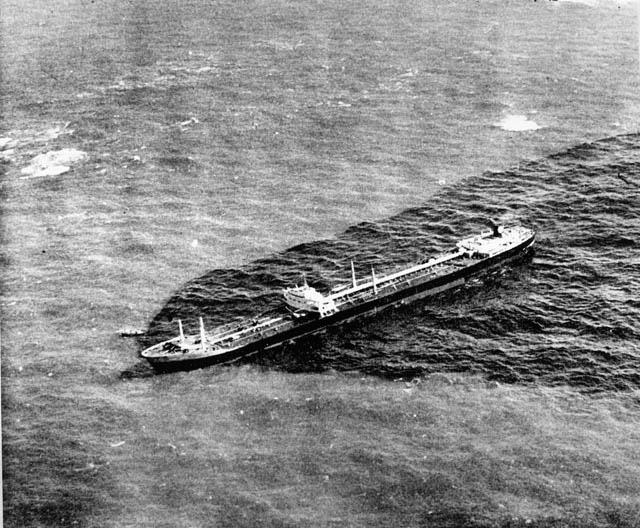
The Torrey Canyon and Jos Smith's A Plume of Smoke
 |
| Photo: www.shipwrecklog.com |
Radio 4's excellent poetry programme The Echo Chamber, hosted by Paul Farley, recently examined poetry's responses to the Torrey Canyon disaster. One of the poets featured was Jos Smith. A while back, I reviewed his pamphlet A Plume a Smoke and though I'd share it again here.
In 1967, when the Torrey Canyon ran into rocks between the
Isles of Scilly and Lands End and spilled over 100,000 tonnes of oil into the
sea, I was four years old, a small child
living in Cornwall. I don’t remember the disaster itself, but I do remember
people talking about it. And I remember how even years later, clumps of oil,
looking like black rubbery pebbles, could be found washed up on our favourite
beaches. So I was very interested to read Jos Smith’s pamphlet, ‘A Plume of
Smoke’, which draws on oral history accounts of the disaster.
The collection starts with poems rooted in the character of
the Cornish coast and waters. ‘Remembrance
I’ uses the patterns of Biblical
language to depict the power of the sea and its relationship to the
people of ‘this place of saints and
graves and mines,/ of harbour bells and broken-winged gulls’ who work on it:
The water giveth and the water
taketh away.
Of the thirty-one lost out of
Fowey last year,
wheeled into silence by the clock
of the tides,
none survived.
Here, the people are vulnerable, and the sea is powerful. The
environment Jos Smith is writing about is an entity in its own right, something
huge and awesome. In ‘Trawler’, we hear that
Some nights there’s the feeling
of stalking a god,
diesel rattling over the waves
towards a presence…
… it hangs like a thought in the
gulf stream,
blowing in and out of the dark:
animal,
theological, cold.
One of the strengths of this collection is the way it
realises landscape as a living thing. ‘Herbivore’, a fabulous poem, rich with
sounds and images, describes Cornwall’s coast as ‘one long animal/ laid down in
the slopes of cove and cliff,/ bristling with sea life like nerves in the
skin…’. Everything that the coastline consists of is part of the one entity:
An animal drifting in and out of
view,
breathing and sleeping, sniffing
and eating,
grazing the outer edge of a
volatile world.
The environment is overwhelmed by a dark, unnatural force,
which is in turn, given the characteristics of a living entity. In ‘The Smell
was the First Thing’,
The weight leaned in and
belittled you.
Every part of it found you out…
[…]
intimate long before
any kind of explanation
This, and many other images will stay with me a very long
time: the slick as a ‘black rind on the water still as leather’; children
trying to stop seabirds landing from in the oil, shouting from the beach
‘“Don’t land! Don’t land! Don’t land!”’; the flaming slick ‘Primal,/ like land
forming where there was no land.’
These are poems filled, as one might expect, with voices : the voices of sailors, of the
Cornish people, of the workers brought in to try and contain the disaster. But
this is a collection which also deals with memory. The 30,000 tonnes of oil
that were pumped into a quarry in Guernsey in an attempt to save the coastline keeps
bubbling up, despite efforts to process it, like memory itself:
A memory that we have been
ill-equipped to meet
with anything but indefatigable
helplessness
[…]
sleeping digester of unliftable
wings,
you have been on the coastal edge
of all our thoughts.
The two poems entitled ‘Remembrance’ use the language of
ritual to suggest a way of dealing with these memories. The dead are remembered and in the living,
some kind of healing begins to take place. In the last poem, ‘Afterwards’, there
is a quiet hope, but it acknowledges that a price will be paid:
All
that repairs, repairs quietly.
All that heals, heals in silence.
The wet head of something will
rise from the pools,
dripping and lonely and not what
it was.
‘A Plume of Smoke’ is
itself a vehicle for remembering.
The Echo Chamber's programme about the Torrey Canyon is available to listen online until 14 May 2017.
A Plume of Smoke is available to purchase from Maquette Press.
21 April 2017
On a Roll and On the Buses!

At the beginning of the year I decided that, instead of submitting to magazines, I'd enter a few poetry competitions. I've never really got into the competition thing, but I have some friends whose names seem to pop up on every shortlist and winners' list, and I thought I'd have a go.
I spent several weeks agonising over which poems to send where, reordering words, fiddling with commas, changing titles and changing them back again, and eventually sent off entries to five competitions. And it seems it was worth it, as I'm really chuffed to discover I have won or been placed in three!
My poem 'Dead Things I Have Seen While Walking' was placed joint fourth in the Kent and Sussex Open Poetry Competition, judged by Catherine Smith. The winner was Janet Sutherland, with her amazing poem 'Braided Wire'. You can read all the winning entries, and the adjudication report, on the Kent and Sussex website, and I am very proud to be placed among such a fabulous group of poems.
'My Glass Father' was placed third in The Plough Prize, judged by Philip Gross. First prize was won by Vicki Morley, and second prize by Millie Guille - two fantastic poems. Once again, I am honoured to be placed in the company of such great work!
And in the Guernsey Literary Festival's Open Poetry Competition, judged by Gwyneth Lewis, my poem 'Demeter's Lament' won first prize, with 'Monsoon' coming joint third, and 'The Cliff' coming fourth. Second prize was won by Gabriel Griffin, and the other third prize by Fiona Ritchie Walker. All the winning poems in this competition will be featured on Guernsey's buses and at the airport, so I am absolutely delighted!
Many thanks to the judges Catherine Smith, Philip Gross and Gwyneth Lewis, and to the competition organisers.
I guess after this flurry of excitement I'd better get back to working on the new collection and the MA!
7 March 2017

29 September 2016
Poem: The Cliff
The
Cliff
(after Anselm Kiefer)
I make a lexicon of things that can be white
linen
lace sea foam face
but these small
dresses nightshirts
doll-sized robes
are spattered grey and maculate
stone ghosts of birds snagged on a
wall of ash
I wonder how they were stitched
smock
shirr pick cross feather
but it’s impossible to tell
their seams have rotted in the spray
I think how
they once were cut from patterns
facing yoke placket pocket welt
but the waves have flung this flock of empty children
against a squalling bluff
all memory of making has been lost
Above the cliff
the sky is cracked like mud
I make a lexicon of things that are unravelled
Sally Douglas
'The Cliff' was a prizewinner in the 2015 Exeter Poetry Festival Competition, and was originally published in the Festival pamphlet, Threads.
9 June 2016
Nana on a Dolphin and other poems...
I'm delighted to have three poems featured at Exeter University's poetry journal, Canto. One is a response to Niki de St Phalle's wonderful 'Nana on a Dolphin'; one has its roots in Russia, and another was described on Twitter by WN Herbert as 'a fine elegiac poem about eyebrows'. (Thank you!) You can now read the poems here.
To whet the appetite, here are a couple of related images:
To whet the appetite, here are a couple of related images:
 |
| A carving by Grinling Gibbons |
By Camster2 - Own work, CC BY-SA 3.0, https://commons.wikimedia.org/w/index.php?curid=6521009
 |
| Nana on a Dolphin, by Niki de St Phalle |
17 May 2016
'Writings on the Wall' Reblogged
I wrote this piece a few years ago. It was Autumn then, not early summer as it is now, but the walls still stand, and walls are still being built. More than ever, I feel that we should really think hard about why we build walls, and whether all of them are really necessary.
Robert Frost and the Berlin Wall
This time of year, when all the green stuff is beginning to die back, the bones of the countryside start to become more visible. Here in Devon, the networks of hedgerows and dry stone walls are suddenly foregrounded; their structure and relationship to the land revealed now that the lushness of summer is receding. They seem organic, these boundaries, part of the nature of things, since many of them have been in place for hundreds of years or more, but of course they are all man-made and need to be maintained.
In Robert Frost’s great poem ‘Mending Wall’ two neighbouring farmers walk the length of the dry stone wall which separates their properties, each on his own side, repairing the holes after the winter weather, making the boundary between them once more complete. ‘Something there is that does not love a wall’, muses Frost’s speaker, pondering the damage that occurs when no one is there to see. But he still goes though the spring ritual of mending: one day a year to ‘set the wall between us once again’. 'Just another kind of outdoor game,' he says.

This particular wall serves no useful purpose as far as the speaker can see, since all it does is separate one kind of tree from another, and as he says ‘My apple trees will never get across/ and eat the cones under his pines…’. His neighbour sees things differently: insists, as his father did before him, that ‘Good fences make good neighbours’, and as readers we may smile at this old cliche, this unsophisticated parochialism. But then we read Frost's description of him picking up the fallen stones ready to put them back in place and mend the wall:
...I see him thereand we realise that to the neighbour this is something far deeper and darker, more primeval, than just a game.
Bringing a stone grasped firmly by the top
In each hand, like an old-stone savage armed
There’s something very ancient in this need for boundaries, for marking one’s territory. History is criss-crossed by the bones of boundaries: Bronze Age field systems on Dartmoor, castle walls, city walls, Hadrian’s Wall, the Great Wall of China. Frost’s wall, like all these walls, is a social and psychological construct as well as a physical one: to the neighbour it is a representation of ownership, and of tradition, of something which must remain fixed. For Frost as poet, it seems to represent the barrier between two people’s points of view.
Point of view about boundaries and territory is addressed in another Frost poem, ‘Stopping by Woods on a Snowy Evening’.The poem starts
Whose woods these are I think I know.The speaker is riding through some woods which are not his, but the trespass seems to be implied not in the passing through, but in the stopping and looking. Perhaps taking pleasure from something that is not yours is a crime, even if by doing so you hurt no-one? Certainly Frost seems to feel that his speaker has crossed some kind of moral boundary. ‘He will not see me stopping here/ To watch his woods…’ has a very different implication from a possible alternative that Frost didn’t use: ‘He will not mind me…’. So even without walls, the social boundaries of territory exist.
His house is in the village though;
He will not see me stopping here
To watch his woods fill up with snow.
In English, the word ‘wall’ is a kind of catch-all. We have to use the same word, whether we mean the internal vertical surfaces of a room, or an exterior dividing agent. German is kinder, and allows speakers to distinguish between an internal wall (Wand) and an external one (Mauer). The most famous German wall is of course the Berlin Wall, a barrier between two diametrically opposed points of view – those of Communism and of Capitalism.
The division of East and West Berlin took physical form on the night of 12th August 1961, when East German troops and workers tore up the streets adjacent to the border, and laid barbed wire and fences to prevent anyone crossing. The first bits of actual wall (concrete and blocks) were laid by August 17th, and soon there was a wall along the whole border. In 1975, however, the East German border troops started building a new type of wall along the border: the Grenzmauer 75. This was made from 45,000 sections of reinforced concrete, each 3.6m high and 1.2m wide. It was painted a bright, inviting white. Graffiti was of course forbidden in East Germany, but by the beginning of the eighties, artists had decided that the Western face of the wall was a massive canvas waiting to be filled. Many artists, known, unknown, or anonymous, painted on the wall. Sometimes a painting was only there a day before it was painted over. Anyone could paint. The wall, a symbol of oppression, became a place of expression – but only to those on one side. The Western side was riotous with colour, the Eastern side plain and greying.

In the Bible, (Daniel 5: 1-31) the ‘writing on the wall’ foretold the demise of the Babylonian Empire. While it would be pushing it rather to pretend that this is directly analogous with the Berlin Wall and its graffiti art, given the events of 1989 and after it’s quite a pleasing idea to prop, rather like some flimsy but decorative ladder, up against it.
More than twenty years after Reunification, few parts of the Wall remain, although on those stretches that do, the Eastern face is now covered with graffiti too. Pieces of the fallen Wall have made their way all over the world and can be found displayed in embassies, parks, schools, hotels and museums. But there is still a vestigial wall, albeit invisible. Germans talk about the ‘Mauer im Kopf’: the wall in the head. (Incidentally, it’s interesting how the spatial specificity the German noun – its externality – makes its paradoxical placing within an internal space – the head – so much more striking.) Polls have indicated that some Germans regret Reunification, and feel that the erosion of cultural differences between the East and West is a negative thing. In other words, they wish the Wall was still there.
Which brings us back to Robert Frost’s neighbour, who wanted the boundaries kept solid, visible, unbroken. Knowing that the boundary was there in abstract was not enough. To him, the wall in the head needed be made manifest by the wall on the land, even though to Frost’s more pragmatic persona, there seemed no point at all.
So, what is the 'something' that makes the gaps, the something that doesn't like a wall? The something that
…sends the frozen-ground-swell under it,It’s frost.
And spills the upper boulders in the sun;
And makes gaps even two can pass abreast.
Image Credits
Image 1, Drystone wall: Lupin at English Wikipedia (Transferred from en.wikipedia to Commons.) [GFDL (http://www.gnu.org/copyleft/fdl.html) or CC-BY-SA-3.0 (http://creativecommons.org/licenses/by-sa/3.0/)], via Wikimedia Commons
Image 2, Berlin Wall: Noir at the German language Wikipedia [GFDL (http://www.gnu.org/copyleft/fdl.html) or CC-BY-SA-3.0 (http://creativecommons.org/licenses/by-sa/3.0/)], via Wikimedia Commons
28 March 2016

9 February 2016
Chinese Poetry: Su Shi
 |
| Su Shi, also known as Su Dong Po (Detail, Fei Lai Temple, Qingyuan) |
I had not really read much Chinese poetry until I went to China earlier this year - just some by Du Fu, and a couple of really well-known ones by Li Po - but obviously, if I visit somewhere, I've got to get to know at least a bit about its literature. So I bought the Penguin Classics edition of the poetry of Li Po (also known as Li Bai) and Tu Fu (also known as Du Fu), searched out my copy of Jonathan Waley's Spring in the Ruined City, translations of Du Fu, and bought Chinese Literature: A Very Short Introduction. I was glad I had read a bit, because when our hosts found out I wrote poetry, they were very keen to discuss the subject with me, and having done a bit of research I was able to not come across as entirely ignorant!
It was on a trip to the Fei Lai Temple, near Qingyuan, that I was introduced to Su Shi (1037 - 1101 CE), also known as Su Dongpo or Su Tungpo. I loved the frieze that depicted him reading his poetry among the mountains and the winds, so when I returned home, I added him to my reading and research list.
As I read more about Chinese poetry, I became more and more excited by it. As far as I understand it, Chinese is an almost totally uninflected language, so the relationships of words to each other in a poem are far more fluid than in English and other European languages. This allows a translator a lot of freedom in the rendering of a poem into their own language.
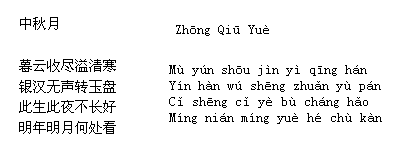
Here is Su Shi's Mid-Autumn Moon in Chinese and in Pinyin:
 |
| Text from http://www.chinese-poems.com/s10.html |
And here is the literal translation from the excellent website Chinese Poems:
Sunset
cloud gather far excess clear cold
Milky
Way silent turn jade plate
This
life this night not long good
Next
year bright moon where see
I am now working on my own version of this almost thousand year old poem, and will post it here when it's done. In the meantime, I would encourage anyone with the slightest interest to have a look at Chinese poetry. I certainly wish I'd known more about it sooner.
 |
| Su Shi,(Complete panel, Fei Lai Temple, Qingyuan) |
Poems, Li Po and Tu Fu, tr Adam Cooper, Penguin Classics
Spring in the Ruined City, Selected Poems of Du Fu, translated by Jonathan Waley, Shearsman
Chinese Literature: A Very Short Introduction, Sabina Knight, Oxford University Press
30 November 2015
Ekphrastic Prompt 7 - The Rucksack by David Inshaw
_1994_1995.jpg) |
The Rucksack (Anticipation) by David Inshaw
|
Today's prompt is a picture by the British artist David Inshaw. Inshaw was a member of the Brotherhood of Ruralists, a group which included Peter Blake, Jann Haworth, Graham and Annie Ovenden, and Graham and Ann Arnold. It was formed in 1975 and placed itself 'in opposition to the scholarly nature of contemporary art which believed that paintings were only really valid if they addressed social questions' (Peter Blake).
I first came across the Brotherhood of Ruralists when in the late '70s my parents bought a pencil drawing by Graham Ovenden, but I know a lot more of their work from the front covers of the second edition Arden Shakespeares that I still have on my shelves.
But back to the image. There's a lot here that could grow into a poem. The rucksack of the title which is barely in the picture; those gulls all looking in the same direction; the white towels; the hidden face; the strangely claustrophobic landscape.
Perhaps you'd like to bounce this image off another poem. Have a look at Matthew Arnold's 'Dover Beach', or Les Murray's 'On Home Beaches' where 'You peer, at this age, but it's still there, ridicule,/ the pistol that kills women, that gets them killed, crippling men/ on the towel-spattered sand.' Think about the contrasts and the potential confluences. Think about your own experiences around beaches and coastlines.
You can see more of David Inshaw's work, his intense, often erotic and sometimes almost surreal pastoralism, on his website here; and an article about him in The Guardian, here.
Happy viewing, and happy writing.
29 November 2015
Poem: Schrödinger's Cat

On 29th November 1935, Erwin Schrödinger published his famous thought experiment about the cat. That famous cat in the in the steel box, the cat which is at the same time dead and alive until the box is opened and the cat is observed. I can't say I fully understand it at a scientific level, but at a poetic level, it's just my thing!
I started thinking about how surely, unless the cat were asleep, it would be able to observe itself. And if it did, what would happen? Would the 'psi-function' collapse and, in effect, the cat kill itself via its own consciousness? Let's hope it's asleep, I thought, so there's no danger of that happening...
So, to celebrate its 80th birthday, here's my ode to Schrödinger's Cat, complete with suitably unscientific 'footnotes'. Imagine it with a bit of a rap feel...

Apparently, in later life Schrödinger wished he'd never mentioned the darn cat. I bet the cat wished so too.
28 November 2015
The Sound of Silence Reblogged
As Christmas is approaching, I was reminded of this piece I wrote in 2010. It was only the third post on this blog, and has had the most page views over the years, so I decided that, with a few minor edits and updates, it was worth sharing again.
John Cage, Edwin Morgan and the finding of meaning
Christmas is coming. I can read the signs. There are sparkly decorations in the shops and department stores have started displaying bizarre ‘gifts’ such as electronic talking monkeys that you can clip to your shoulder. (Thank goodness there weren't 'gifts' like that 2000 years ago, or the Three Wise Men might have arrived bearing Gold, Frankincense and Talking Shoulder Monkey...) What else? Oh yes, X Factor fans are thinking about the Christmas Number One. And on Facebook, a campaign against anodyne manufactured pop is once more underway. There’s a group which wants to try and get John Cage’s 4’33’’ onto the Christmas Number One spot. I have to confess, I’ve clicked the Like button.
Born in 1912, John Cage was an American composer, philosopher and artist who became famous for stretching the bounds of music. His 4’33’’ is probably his most famous work. It was composed in 1952, and is for any combination of instruments. The score basically instructs the musicians to not play during the piece’s three movements – it is four minutes and thirty three seconds of absence of instrumental playing. However, it is not four minutes and thirty three seconds of silence, but of environmental noise, of expectation, of aural space.
Cage had been considering the idea of silent music for a while, but was pushed into writing the piece by the example of the artist Robert Rauschenberg, who had produced a series of paintings which were basically large white squares. The point of this was that even if they just looked like blank canvases, they would change according to the conditions in which they are viewed: the quality of the light, or what other colours there might be in the room in which they were displayed. In a similar way, Cage’s 4’33’’ uses the silence as a background canvas for the ambient sound and atmosphere: the sounds to which we are usually too distracted to pay attention. Both Rauschenberg’s pictures and Cage’s music required the audience to pay hyper-close attention in order to experience them. Viewers and listeners had to make an effort: it wasn’t all laid out there in front of them. In fact, this requirement of effort meant that they had to become part of the creative process themselves.

John Cage said ‘I have nothing to say and I am saying it and that is poetry’. Edwin Morgan, the Scottish poet who died this year, and whose tribute event, organised by the Poetry Society is taking place at the Southbank Centre, London, on Nov 3rd, took those fourteen words and made his own poem of them. The poem, 'Opening the Cage', is a fourteen line variation of those fourteen words, each line creating new meanings through new combinations.
It takes effort to tease meanings out of these lines, and I’m sure different people will find different things. To me, the first line seems to state the poet’s need to write, his uncertainty about whether that writing has any worth, and the fact that this dilemma is what he is considering:
I have to say poetry and that is nothing and I am saying it
By line 7 the words seem to have assembled themselves into an invitation to strip away all the fripperies of life and perhaps also of language to get to the bare bones:
To have nothing is poetry and I am saying that and I say it
And after a sonnet’s worth of variations, the poem concludes (if a conclusion it is) with the decisiveness of a manifesto:
Saying poetry is nothing and to that I say I am and have it
John Cage was very interested in aleatoric music, the music of chance. Morgan’s poem is very much in that spirit – the randomness of word-shuffling produces chance combinations from which meaning can be derived. Morgan chose the fourteen he felt made the meaning he wanted. It’s an interesting paradox, however, that while the poem is punningly entitled ‘Opening the Cage’, implying the freeing of language and meaning, Edwin Morgan might be considered to have imposed a cage of his own by using the sonnet form. (If it is a sonnet – certainly Don Paterson includes it in his 1999 Faber Anthology 101 Sonnets.) However, a more controlling poet might have added punctuation to clarify the meanings he wished his reader to derive. Morgan does not do this. He lets the meaning of each line stay fluid and free. (Have a look at the similarly constructed 'The Uncertainty of the Poet' by Wendy Cope, a poem also derived from another artist's work, to see how punctuation pins down meaning.) It seems to me, also, that implicit in the poem are all the other possibilities which Morgan did not use. For these reasons the sonnet-shaped cage is only an illusion. It’s a poetic Tardis: the inside is bigger than the outside.
If one accepts this notion, ‘Opening the Cage’ is a poem that could continue, inside the reader’s head, for a lifetime. With 14 words there are 14! (that is, 14 factorial: 14 x 13 x 12 x 11 x 10 and so on down to x 1) possible combinations – in other words, 87,178,291,200 different ways of arranging those words. Well, you might say, some of those combinations will just be gobbledygook. Okay, let’s go for a gobbledygook one: the purely alphabetical
am and and have I I is it nothing poetry say saying that to
Is there any meaning to be found in that? Of course there is, of you look hard enough. The ‘am’ separated from its implied ‘I’ has a plaintive, questioning tone, while the repeated ‘and’s and ‘I’s reinforce this feeling of uncertainty. Then we have the question around which this line revolves, the shaky, inverted ‘is it nothing, poetry?’, followed by an imploring ‘say’ – tell me the answer. Next comes a phrase that implies no confidence in the received answer, ‘saying that to…’. This seems to me to question the motives of the unheard speaker: You’re just saying that for some other motive. Whatever it is, it means I can’t rely on your answer to help me in my search for whatever I’m searching for.
And I’ve derived that ‘meaning’ from listing those fourteen words alphabetically. You, dear reader, might derive a completely different meaning – it’s up to you. All it takes to derive meaning is a reader with the willingness to do so.
 |
| "Edwin Morgan by Alex Boyd" Licensed under CC BY-SA 4.0-3.0-2.5-2.0-1.0 via Commons. |
This kind of poetry, poetry that demands so much of the reader’s participation in the act of creativity, reminds me of the writing of someone I once met in a critique group. She was severely dyslexic, and had come to poetry, and literacy in general, quite late in life. For her, her poetry was mostly therapeutic, but for her readers, it became something quite exciting by virtue of her dyslexia. I can’t give any actual quotes, because I’m not in touch with her now, but, for example, in a poem about domestic violence, she might write things like ‘meating’ instead of ‘meeting’, and ‘burned’ instead of ‘born’ – changes which often added a startling and completely unintended complexity to her poems. When she was alerted to this, she was often delighted with the effect that she had created, and would let it stand. Her meanings were created in an aleatoric way, and the initially chance significances found by her readers were then fed back into her later revisions of the poems.
I’m not sure that Cage’s 4’33’’ will make the number one spot*. Nearly sixty years after it premiered it still provokes angry responses, as can be seen by some of the comments on the Daily Mail's coverage of the Facebook campaign. One person even rants about how the people who support the campaign should be locked up. What amuses me, though, and would probably have pleased both John Cage and Edwin Morgan, is the fact that the Cage piece must have suggested itself for this year’s campaign simply because of its chance sonic relationship with last year’s successful campaign band. Rage Against the Machine – Cage Against the Machine. A chance rhyme from which such appropriate significance and meaning has been derived. How could it have been anything else?
The making of Cage Against the Machine, 2010.
*In fact, Cage Against the Machine made it to number 21 in the UK Chart Singles. X Factor's Matt Cardle took the Number 1 spot with When We Collide. Hey ho, never mind.
‘Opening the Cage’ can be found in 101 Sonnets, ed Don Paterson, Faber 1999.
27 November 2015
Christmas Recommendations - Poetry for Children
As December is bounding towards us with tinsel between its teeth I thought I might get into the festive spirit and recommend a few books for Christmas presents. Today's selection is for children, but any sensible adult would also enjoy any of these!


Ted Hughes' poetry for children is just as good as his 'grown-up' stuff. In his Collected Poems for Children there are people and animals (Crow makes an appearance), and a series of Moon Poems which are absolutely stunning. The illustrations by Raymond Briggs seem completely organic to the text - it's like he's just sat down with each copy and drawn them on specially for each individual reader. This is a beautiful book, which I have just discovered is currently out of print. But I'm still going to feature it. Faber, what are you doing? Get it back in print asap! In the meantime keep a look out for it in charity shops... or find the individual collections by Hughes such as Meet My Folks and Nessie the Mannerless Monster.

Ring of Words features a fabulous selection, chosen by the inimitable Roger McGough. Poets range from Walter de la Mare to Stevie Smith, Wendy Cope to Donald Justice, George Szirtes to Grace Nichols. This is an inspired selection. If some totalitarian regime passed a law that a child should only have access to one poetry anthology, I would say let it be this! Give it to them while they're at primary school and they'll still be reading it when they moving up through secondary.
Update: I have just discovered that this is also no longer in print. Faber, what are you doing - again? However, there are lots available at the moment for mere pence at a certain online book retailer's 'marketplace'...

Okay, slight failure on the recommending books that people can actually buy front. Sorry about that.
But there's some brilliant children's poetry out there. One I'm going to give to someone this Christmas (shhh! Don't tell!) is Carol Ann Duffy's 101 Poems for Children: A Laureate's Choice, (Macmillan, 2013) with poems ranging from Emily Dickinson to Alice Oswald and ee cummings. However, before I wrap it I'm going to have to read it myself. I have to test it out, don't I?

26 November 2015
Ekphrastic Prompt 6: The Mask of Agamemnon
 |
| Mask of Agamemnon |
Isn't this an amazing image? A golden mask, life-sized, flattened, with eyes which are at the same time open and closed. Beard, eyebrows, ears, hammered and chased into fine detail - simultaneously naive and strangely sophisticated.
This mask was discovered in 1876 by Heinrich Schliemann, a C19th German businessman who became a famous treasure hunter/archaeologist, and is now in the National Archaeological Museum of Athens. Schliemann had previously excavated the remains of Troy, where, as told in Homer's Iliad, an epic ten year war was fought between the Greeks and the Trojans. The leader of the united Greek armies was Agamemnon, the king of the Mycenaeans, whose brother's wife, Helen, had been abducted by the Trojan prince, Paris.
When Agamemnon returned from the war, the legend is that he was killed by his own wife's lover, Aegisthus, or perhaps even by his wife Clytemnestra herself. This mask was found in a royal grave at Mycenae, and Schliemann was convinced that it was the death mask of Agamemnon himself, although some have claimed it to be a fake, and some archaeologists now believe it pre-dates the Trojan War by several hundred years. It is made of beaten gold, with the fine details chased out using a sharp tool. It is an amazing artefact. I saw it in Athens nearly thirty years ago when backpacking around Europe and it remains an iconic memory for me.
Today's prompt is to take this mask as a starting point for a poem. There are so many directions in which it could take you! You could just think about masks in any or all of their forms; you could concentrate on Agamemnon and his story; you could think about Schliemann; you could explore ideas of real and fake. You could even link back to what is often considered the first piece of ekphrastic writing: the description of The Shield of Achilles' in Book 18 of The Iliad.
If you are interested in some background, there's an interesting discussion here, and an article about the authenticity question here.
If you fancy reading or rereading The Iliad the translation by Richmond Lattimore is the one to go for.
And here's what Google has to say about the word 'mask':
mask
mɑːsk/
noun
- 1.a covering for all or part of the face, worn as a disguise, or to amuse or frighten others.
synonyms: disguise, veil, false face, domino, stocking mask, fancy dress; More
- 2.a covering made of fibre or gauze and fitting over the nose and mouth to protect against air pollutants, or made of sterile gauze and worn to prevent infection of the wearer or (in surgery) of the patient.
synonyms: matte, photomask, shadow mask, masking, masking tape
"a mask that blocks out part of the image"
verb


Image Credit: "MaskOfAgamemnon" by Xuan Che - Self-photographed (Flickr), 20 December 2010.
Licensed under CC BY 2.0 via Commons.
Definition Credit: Google
Subscribe to:
Posts (Atom)